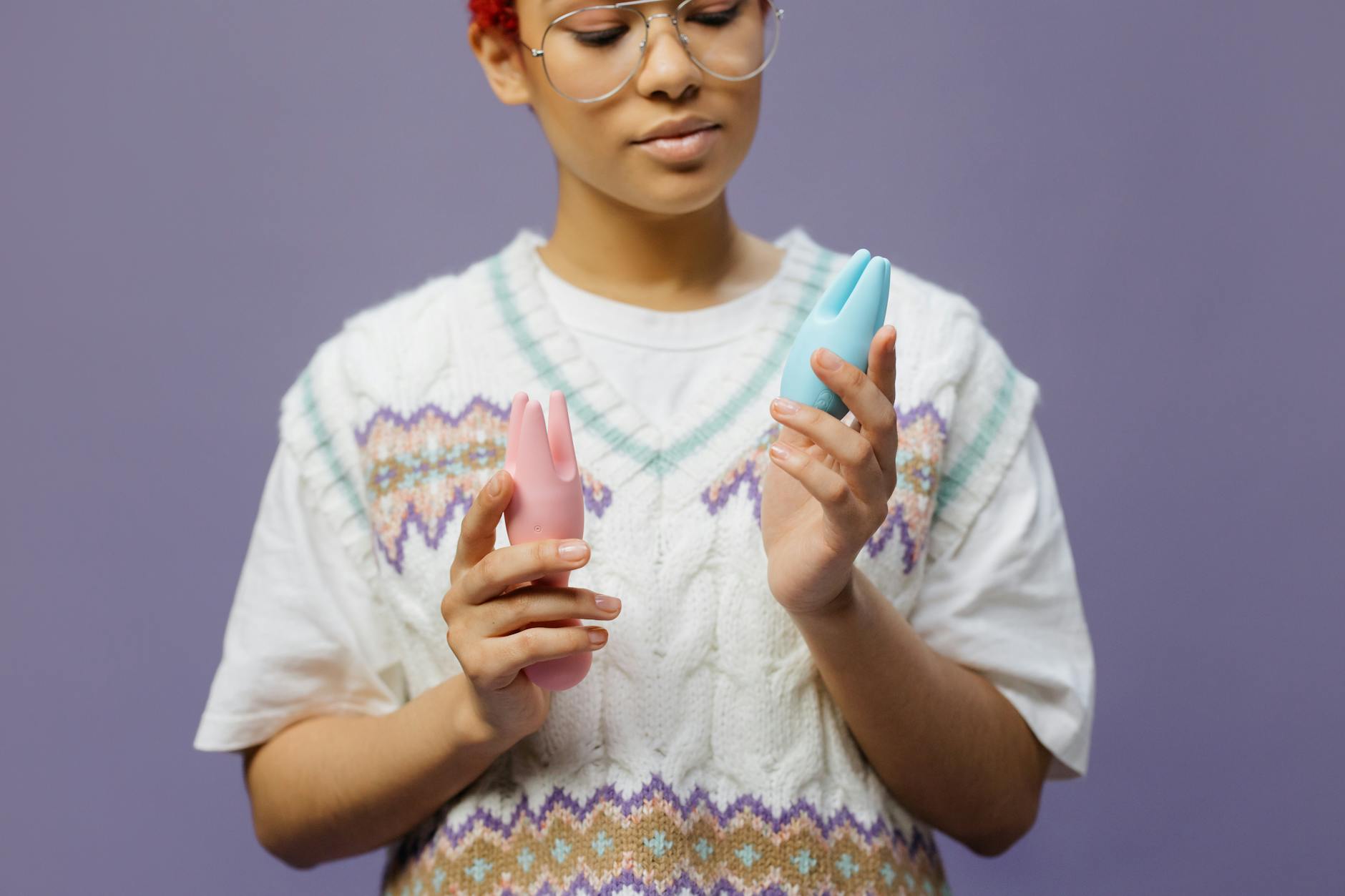
Why Lemon Vibrators Feel Different During Your Cycle
Let's be real. Some weeks your lemon vibrator hits different. The same pattern, the same toy, the same partner. But sensation varies wildly depending on where you are in your cycle. You're not imagining it. You're not broken. Your hormones are literally changing how your nerve endings respond to vibration.
Understanding this shift isn't just trivia. It's the difference between frustration and pleasure, between forcing an orgasm and actually having one.
How your cycle rewires sensitivity week to week
Your menstrual cycle is roughly 28 days long, and it divides into four distinct hormonal chapters. Each chapter changes blood flow to the clitoris, increases or decreases nerve sensitivity, and shifts how quickly your arousal builds. This isn't a small effect. This is a measurable, predictable change in physical response.
During the follicular phase, right after your period starts, estrogen is climbing. Blood flow to the genitals gradually increases. Nerve endings become more responsive to light stimulation. This is why many people report that gentle vibration, like pattern one on the Lem vibrator, feels surprisingly intense early in the cycle. You're not being too sensitive. Your body is literally more sensitive.
As you move toward ovulation, estrogen peaks. This is often the phase where you notice sensation is sharpest, arousal builds fastest, and orgasms come easiest. Some people describe this as the "goldilocks" window. Everything feels right.
The luteal phase: when sensation shifts again
After ovulation, progesterone rises and estrogen begins to fall. This is the luteal phase, which lasts about two weeks and includes the few days before your period. Here's where it gets interesting. Many people report that the same vibration settings feel less intense, more work-intensive, or even slightly uncomfortable.
This doesn't mean lemon vibrators stop working. It means your nervous system is in a different state. Progesterone can increase pain sensitivity in some people while decreasing clitoral sensitivity in others. Blood flow to the genitals may be lower. Your pelvic floor muscles may be more tense.
The upshot: if you're used to pattern three or four during ovulation, you might need pattern five or six during the luteal phase. Or you might prefer a different toy altogether. Or you might need longer warm-up time and more lube, even if you typically use neither.
What the research actually shows
Studies measuring genital blood flow and skin conductance over a full cycle consistently find peaks around ovulation. One study from the Archives of Sexual Behavior found that self-stimulation time was shortest during ovulation and longest during the luteal phase, despite participants having more subjective pleasure during ovulation. Translation: your body is wired to respond fastest mid-cycle, but that doesn't mean pleasure is impossible the rest of the time. It just requires different input.
Other research shows that vibration frequency preference can shift across the cycle. Some people want faster patterns before ovulation and slower, more rumbly patterns after. Some want the reverse. There's no universal rule. You have to track your own data.
How to actually use this information
Step one is awareness. Start paying attention to when you reach orgasm easily and when you don't. Note the intensity setting you're using. Track it against your cycle if you menstruate. Cycle-tracking apps exist, but honestly, a note in your phone works fine.
Step two is flexibility. If you own only one vibrator, you already know it can work across your whole cycle. But if you're open to variety, having a second clitoral vibrator with different characteristics helps. The lemon vibrator excels at precise, targeted stimulation. Something broader or with a different frequency might pair better during your luteal phase.
Step three is expectation management. If you typically orgasm during ovulation and it takes longer during the luteal phase, that's not failure. That's your body being honest about what it needs. Some weeks you orgasm in five minutes. Some weeks it takes twenty. Both are normal.
Lube, warm-up time, and mental state matter tremendously during lower-sensitivity phases. You might find that you need five minutes of manual stimulation before the lemon vibrator feels good, whereas mid-cycle you skip straight to the toy. There's no "right" way.
The menstrual phase and breakthrough sensitivity
Right at the start of your period, during heavy flow days, many people report lower desire and lower sensitivity. This makes biological sense. Your body is cycling down from a peak. Your attention might be elsewhere.
But there's a window for some people. One to two days before your period starts, and the first day or two after, sensitivity can spike again. This is sometimes called the "hidden peak." It's shorter than the ovulation peak, and quieter, but real. Some people find their strongest orgasms right here.
The catch is that this window is short and highly individual. Tracking helps you notice if this is true for you. If it is, you can plan accordingly.
Partners and cycle awareness
If you have a partner, sharing this information matters. Not as an excuse or a burden ("sorry, my hormones are making this hard"), but as data that helps you both. A good partner wants to know that week two is often easiest and week four might take more time. They want to know your sensitivity is shifting, not your desire. They want to help, not guess.
This conversation also matters because it separates pleasure from pressure. If your partner thinks you should orgasm the same way every time, that's a problem. If they understand your body is cycling through different configurations, you can both relax. You can experiment. You can ask for what you need week to week.
When sensitivity changes don't match the predicted pattern
Your cycle might not follow the textbook rhythm. You might be on hormonal birth control, which flattens the cycle's natural peaks and valleys. You might have conditions like PCOS or endometriosis that disrupt typical hormone timing. You might be experiencing perimenopause or postmenopause, where the cycle shifts entirely.
None of this means you can't use clitoral vibrators or tune into your body's patterns. It just means your pattern might look different. Tracking is even more important here, because you can't assume the standard timeline applies.
If you're on the pill, some research suggests you'll have less variation across the month, but many people still notice shifts. Track it anyway. Don't assume your cycle is flat just because you're contraceptively suppressed.
The bigger picture: knowing your own pleasure
This is really about agency. Understanding how your cycle affects sensation means you stop blaming yourself for fluctuations. You're not less capable of pleasure. Your clitoris isn't broken. Your lemon vibrator isn't the problem. Your hormones are cycling, and you're smart enough to notice and adapt.
Pleasure is not a constant you dial in once and forget. It's a conversation between your body, your mind, your cycle, your stress, your sleep, and your context. Hormones are one voice in that conversation. But they're a loud voice, and paying attention to them is how you actually get better at knowing yourself.
Start tracking this week. Pick one detail: sensitivity level, time to orgasm, or preferred intensity setting. Track it for two cycles. You'll see the pattern emerge. That pattern is your body's truth. Use it.
People also ask
Does birth control change how clitoral vibrators feel?
Yes, usually in the direction of flattening. Hormonal birth control suppresses the natural cycle, so sensitivity tends to be more stable across the month. But that doesn't mean it's completely flat. Many people on the pill still notice subtle shifts. Some notice none. And some find that the pill actually increases their baseline sensitivity or desire, depending on the type and dosage. If you're on hormonal contraception and your vibrator feels different than it used to, talk to your prescriber about whether the dose or type might be contributing.
Can I predict my peak sensitivity day?
Yes, roughly. Most people with a typical 28-day cycle hit peak sensitivity around day 14, right around ovulation. You can use ovulation predictor kits, cycle apps, or just track when you notice the sharpest sensation and easiest orgasms. Once you've tracked two or three cycles, the pattern usually emerges. But individual variation is huge, so your peak might be day 12 or day 16. The only way to know is to pay attention.
Is lower sensitivity during the luteal phase permanent?
No. It returns each cycle when estrogen rises again. If you're in your luteal phase and sensation feels duller, you're not experiencing permanent changes. Your hormones will shift again, and so will your sensitivity. That's actually the useful part. It's temporary, it's predictable, and you can work with it.
Should I avoid using my lemon vibrator during my period?
There's no medical reason to avoid it if you want to use it. Period blood is sterile. Your vulva and vagina aren't damaged by your cycle. If you like the sensation and it's comfortable, go ahead. If you prefer not to, that's fine too. The only concern is if you have a menstrual cup or tampon in place. Remove it first.
Why do some weeks feel impossible and other weeks easy?
Hormones. Specifically, estrogen changes blood flow to your clitoris and influences nerve sensitivity. But also stress, sleep, whether you're thinking about that email from your boss, relationship dynamics, and general arousal. All of these matter. Hormones are the foundation, but they're not the only thing. Pay attention to the whole picture.
Can I adjust my vibrator settings to work around cycle changes?
Absolutely. Many people find they prefer lower intensity settings during ovulation and higher intensity during the luteal phase. Some prefer longer warm-up time and more lube during low-sensitivity phases. Some swap to a different toy entirely. The lemon vibrator's range of patterns gives you flexibility. Experiment. Your week-to-week needs are legitimate, not a problem to fix.
The takeaway
Your body is not random. Your pleasure is not a mystery you have to solve through sheer force. Your clitoral vibrator doesn't change. Your sensitivity does, and that's actually useful information. Learn to read it. Track it. Adapt to it. That's how you move from frustration to genuine, easeful pleasure. Understanding your cycle is understanding yourself.
For more on how to select the right tool for your body, check out how to choose between suction and vibration clitoral toys. And if you're new to vibrators altogether, our guide on how to use lemon vibrators for maximum pleasure and comfort walks through patterns, timing, and what to expect.
Your pleasure matters. Your cycle is information, not an obstacle. Use it.