Let's start with the awkward part no one talks about
One of you has an orgasm and immediately wants to cuddle and be done. The other one is still warm, still interested, still capable. This is refractory period mismatch, and it's one of the most common rhythms in long-term partnerships that nobody addresses directly. It shows up in couples therapy disguised as "we don't have the same sex drive," but it's really about biology, not desire.
The refractory period is the recovery time after orgasm. For some people it's two minutes. For others it's twenty or thirty. Those differences are physiological, not a sign of anything wrong with either partner. But they create a real coordination problem. So here's what we actually do about it.
What refractory mismatch actually looks like
Let's say you're a person who recovers quickly. You orgasm, your nervous system resets, and within minutes you're interested again. Your partner has the slower refractory period. They orgasm, and their body needs a solid fifteen or twenty minutes before touch feels good again. Overstimulation kicks in fast. If you try to keep going, it feels uncomfortable or even painful for them.
The temptation for the faster partner is to feel rejected or boring. The slower partner often feels guilty for "shutting things down." Neither of these narratives is true. What's actually happening is that your nervous systems are built differently.
This mismatch accounts for a surprisingly high percentage of the couples I work with who say they "don't connect sexually" but actually have no other intimacy problems. They just never learned to work with their recovery timelines instead of against them.
Why lemon vibrators change the equation
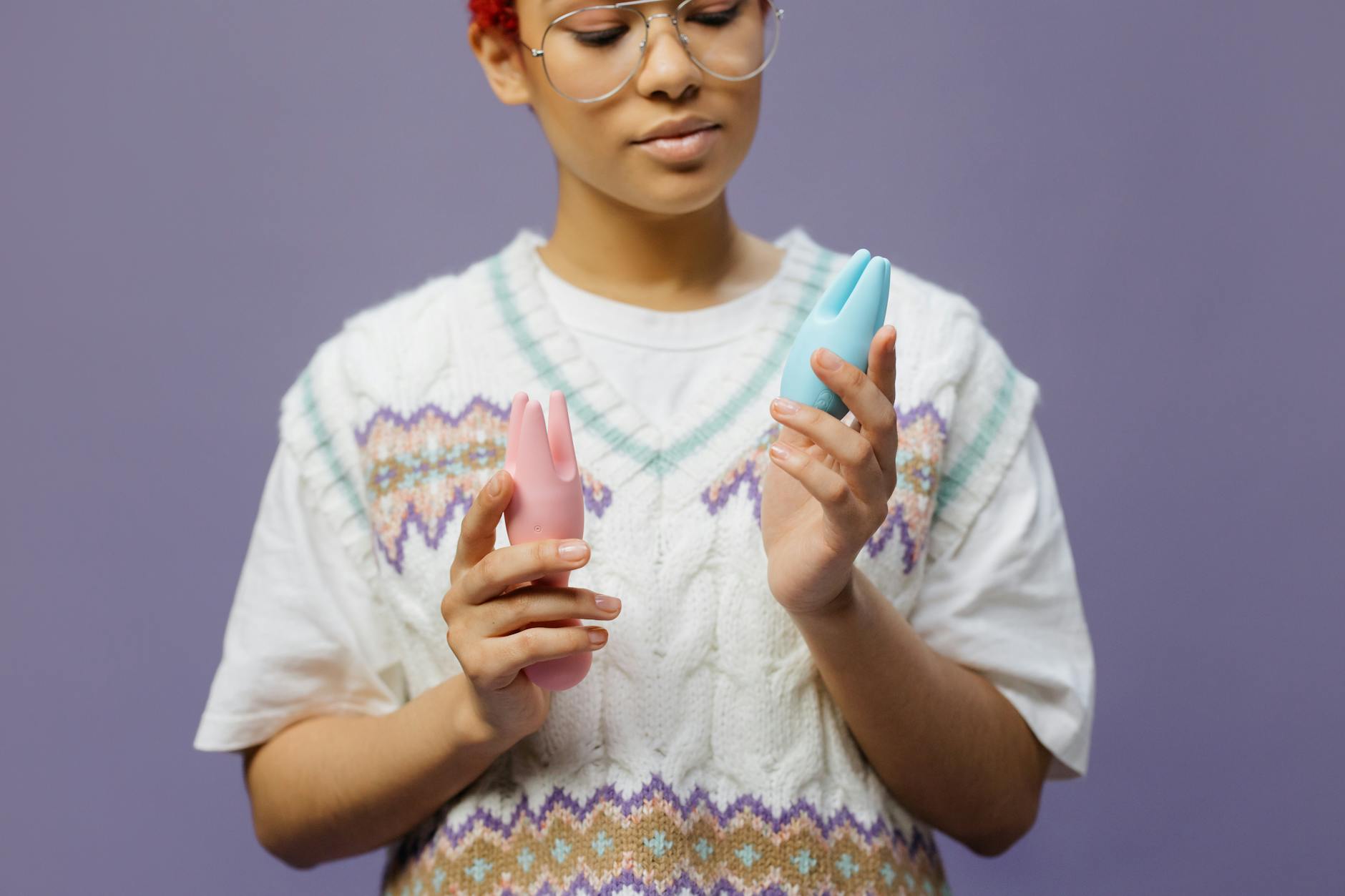
Here's the practical fix. During your partner's refractory period, a lemon clitoral vibrator lets you stay engaged with your own pleasure without pressuring them to perform or recover faster than their body can manage. That's the whole win right there.
Lemon vibrators are designed for focused, efficient stimulation. The suction pattern means you don't need a partner's hands or body to feel satisfied. You can use one while your partner rests, recovers, and reconnects. They might hold you, kiss you, talk to you, or watch. You get continued pleasure. They get space. Nobody's waiting around feeling bored or guilty.
This is especially true for the Lem vibrator, which is built to deliver consistent, intense sensation without requiring a lot of physical coordination from a partner.
The practical setup that works
Timing matters here, so let's walk through it. After your partner orgasms and enters their refractory window, have a conversation in the moment about what they need. This isn't subtle. It's direct: "I'm still interested. Do you want me to use the vibrator while you recover, or do you want space?" Most slower-refractory partners will actually feel relieved. Permission to rest without shutting things down entirely is huge.
If they're open to it, here's the rhythm that works. Have them lie next to you, or sit nearby. You use the lemon vibrator on yourself. They can touch you non-sexually, kiss you, talk dirty, watch, or just be present. The key is they're not doing the work. Their body is still in recovery mode, but the intimacy continues.
For many couples, this becomes a favorite part. One partner told me, "I realized I could finally relax during sex instead of performing the whole time." The slower-refractory partner gets to experience pleasure without the pressure to keep up. The faster partner gets what they need. Connection doesn't stop.
The consent and communication piece
Refractory mismatch is one of the few sexual coordination problems where direct conversation actually solves most of it immediately. You don't need to guess. Ask: How long does your refractory period actually last? Is it longer on some days than others? What would feel good during that time? Would you want me to stay engaged with you, or do you need space?
Some people's refractory periods are five minutes. Some are forty. Stress, sleep, hormones, and overall health all shift this. Your partner might have a twenty-minute window one week and a forty-minute window another week. So check in regularly, not just once.
One more thing: if your partner uses a lemon vibrator too, you can absolutely turn this into something collaborative. You each use what works for your own body while staying present with each other. This isn't a workaround or a substitute for partnered sex. It's an expansion of it.
When to bring it up (timing and framing)
Not during sex. Have this conversation outside the bedroom when there's no pressure and no one's in the middle of trying to coordinate. Something like: "I've noticed we recover at different speeds after we come. I want to make sure we're both satisfied. What if we tried using a vibrator during your recovery time so I don't have to wait?"
Frame it as a solution for both of you, not a workaround for them being slow. Because here's the thing: slower refractory periods are often associated with deeper, longer orgasms. They're not a flaw. They're just a different pattern. When both partners understand that, the conversation shifts from "we're broken" to "we're different, and here's how we work with that."
If your partner is hesitant about toys, that's different conversation entirely. How to Use Lemon Vibrators When You Feel Anxious About Trying Toys walks through the barriers and how to move past them.
The other direction (if you're the slower partner)
If you're the one with the longer refractory period, you're not broken. You're also not responsible for managing your partner's pleasure. But if you want to stay engaged while your body recovers, here's what works.
You can absolutely use a lemon vibrator during your own recovery window if it feels good. Some slower-refractory people find that gentle, consistent stimulation actually helps their nervous system recalibrate faster. Others find it overstimulating. Know your body.
The bigger win is just giving your partner permission to keep going without you. That takes the pressure off both of you. How to Use Lemon Vibrators When Partners Have Different Orgasm Speeds covers this from a different angle, but the core principle is the same: stop making one person's rhythm the default for both.
The psychological shift that matters most
Refractory mismatch only becomes a problem in partnerships where one person's timeline is treated as the "right" one. If you've spent years assuming your faster recovery means your partner is uninterested or you're boring, a lemon vibrator won't fix that belief on its own. You have to actually believe that different isn't deficient.
This is where couples coaching comes in. When I work with partners on refractory mismatch, the conversation is usually less about technique and more about belief. "I thought if they didn't want to keep going, they weren't attracted to me." Not true. Recovery time is biology, not desire.
Once that shift happens, everything gets easier. A lemon clitoral vibrator stops being a workaround and becomes just another tool in a toolkit of ways you can both get what you need.
FAQ: Refractory Mismatch and Lemon Vibrators
How long do refractory periods actually last?
It varies wildly. Some people need two to five minutes. Others need twenty to forty minutes or longer. Age, overall health, stress levels, hormones, and sleep all factor in. Your partner's refractory window might change week to week based on where they are in their cycle or how much sleep they got. The only way to know is to ask and observe over time.
Can you shorten a refractory period?
Not really, and honestly, don't try. Refractory periods exist because your nervous system needs time to regulate. Pushing through that can lead to desensitization or numbing sensation over time. The better move is to work with what your partner's body needs, not against it. Lemon vibrators help because they let you get pleasure without waiting.
What if my partner doesn't want me to use a toy while they're recovering?
That's valid, and it's worth understanding why. Sometimes it's about feeling insecure or left out. Sometimes it's a real boundary about what they want to see or be around. Have that conversation without judgment. If toys feel like a barrier, How to Use Lemon Vibrators When You Feel Self-Conscious About Pleasure might help both of you work through it.
Can both partners use vibrators at the same time?
Absolutely. If you both like lemon vibrators, you can use them simultaneously while staying connected. One person orgasms, both of you keep using vibrators, you ride the wave together. Some couples find this is the most connected version of their sex life because there's no pressure, no performance, just both people getting what feels good.
Is refractory mismatch a sign we're not sexually compatible?
No. Sexual compatibility is about communication, willingness to adapt, and genuine care for each other's pleasure. Different refractory periods are just a logistics problem, not a compatibility issue. The couples I see who handle this well say it actually deepened their connection because they had to talk about pleasure directly instead of assuming.
How do I bring up refractory mismatch without making my partner feel slow or broken?
Speak from your experience, not their deficit. Instead of "Your refractory period is too long," try "I recover fast and I'm still interested after you orgasm. I don't want to pressure you, but I also want to stay engaged. What if I used a vibrator during your recovery time?" Frame it as a solution you both benefit from, not a problem they need to fix.
The bigger picture
Mismatched refractory periods are one of those coordination problems that seem unsolvable until you realize they're not about sex at all. They're about rhythm. And rhythm is something you can absolutely work with when you have the right tools and the willingness to talk about what you actually need.
Lemon vibrators help with that rhythm because they let both partners get pleasure on their own timeline without disconnecting. That's not a workaround. That's actually how pleasure works when you stop forcing everyone into the same pattern.
If you're sitting with refractory mismatch and wondering if it means something's wrong with your relationship, the answer is no. It means you're normal. And now you know how to handle it.
Want to talk through how this might work in your specific situation? Get in touch with us and we can walk through it together.