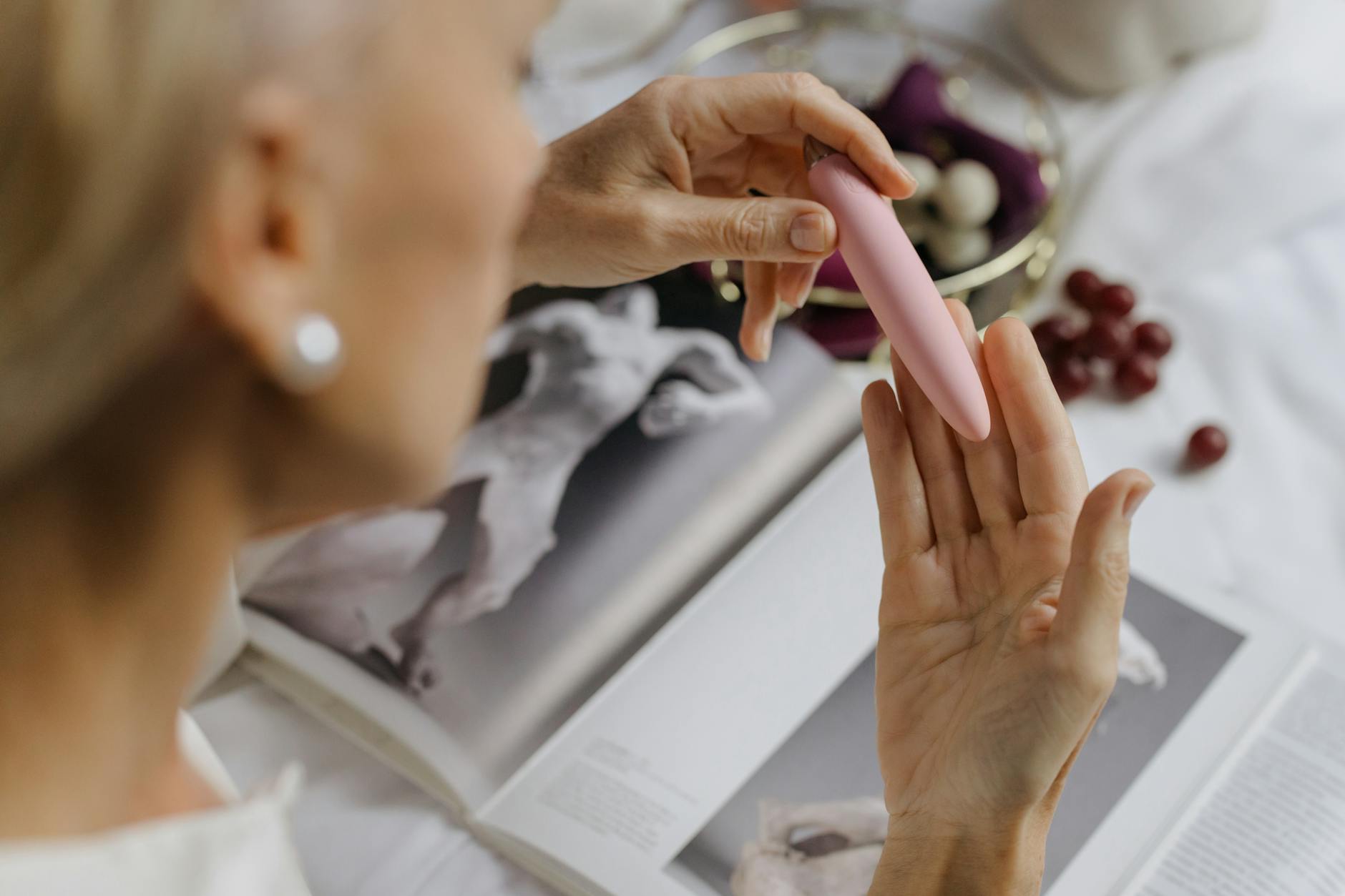
Let's start here: menopause didn't steal your pleasure
It changed the delivery system. Estrogen drops. Tissue thins. Blood flow shifts. But the neural pathways that light up when you experience pleasure? They're still there, fully intact, waiting.
Most people assume menopause is a one-way door. It's not. Plenty of women report their most satisfying orgasms arrive after fifty. And here's what they're often using: air-suction devices like lemon vibrators, which work beautifully with post-menopausal bodies because they don't require the kind of friction that can feel raw or overstimulating on sensitive tissue.
What actually happens to clitoral sensation during and after menopause
When estrogen drops, three physical shifts occur simultaneously. First, the clitoral glans (the most sensitive part) has less blood flow, which means arousal takes longer to build. Second, the hood of tissue protecting the clitoris can become thinner, making direct contact feel too intense. Third, your body produces less of its own lubrication, which compounds sensation changes because friction feels different without that slickness.
But here's the part everyone gets wrong: your clitoris doesn't lose sensation. It doesn't shrink or disappear. The nerve endings remain. What changes is how quickly they respond and what type of stimulation feels best.
For many post-menopausal people, the shift away from direct vibration toward suction stimulation feels revelatory. Why? Because suction engages the entire clitoral complex (not just the tip) without the aggressive friction that can feel numb or irritating.
How lemon vibrators and suction toys differ from traditional vibrators
Most vibrators work by oscillating. The lem and similar air-suction devices work by creating a gentle seal and pulsing pressure. Think of it as the difference between tapping your shoulder and cupping your hand over it.
For post-menopausal bodies, this matters. Direct vibration on thin or sensitive tissue can feel sharp. Suction stimulates the broader network of nerve endings without that pointed sensation. You get arousal building steadily instead of a narrow spike of intensity.
Many of my clients in their fifties, sixties, and beyond report that they never had consistent orgasms before menopause but discovered them after switching to suction-based lemon clitoral vibrators. Part of that is biological. Part of it is that they finally had permission to explore what actually felt good rather than what they thought should feel good.
The physical setup that works best post-menopause
If you're returning to pleasure after menopause, start with these non-negotiables.
Use water-based lubricant. This is not optional. Your body's natural lubrication is lower, and thinner tissue benefits from external moisture. Water-based lube won't damage silicone toys (silicone lube can) and feels comfortable for extended sessions.
Begin with lower intensity settings. The lem has multiple settings. Start at pattern one or two. Your tissues will tell you when they're ready to escalate. Most post-menopausal people find their sweet spot sits in the middle range, not the most intense.
Budget extra warm-up time. Arousal takes longer post-menopause. That's not dysfunction. That's biology. Spend 15 to 20 minutes in foreplay or solo touch before reaching for any toy. Your nervous system needs time to shift into receptivity.
Apply the device gently at first. With suction toys, the seal matters more than pressure. Position the lem so the opening sits flush against your clitoris without forcing anything. Let the suction build naturally rather than pressing hard.
When sensation returns slowly, what to expect
If you've spent months or years without satisfying orgasms during perimenopause, you might notice sensitivity returning unevenly. One week it's there. The next it's quieter. This is completely normal as your body adjusts to new hormone levels.
Don't interpret the quiet weeks as permanent. Menopause is a process, not an event. If you're in early post-menopause, your body is still settling into its new hormonal landscape. Some women report that sensation stabilizes more clearly 18 to 24 months after their last period.
In the meantime, lemon vibrators work well because you don't need peak sensation to experience them. Even at 60% of your pre-menopausal sensitivity, a lem or similar suction device will create satisfying sensation because it engages a broader surface area.
I recommend treating this period as exploration rather than performance. No timeline. No expectation that orgasm has to happen a certain way or within a certain timeframe. That shift in mindset alone changes the experience.
Hormonal therapy and how it interacts with pleasure
Some people use hormone replacement therapy (HRT) during menopause. If you are, give yourself at least three months to notice changes in sensation and arousal. Estrogen takes time to rebuild tissue responsiveness.
If you're not using HRT and you've gone a full year without any return of sensation, it's worth a conversation with your doctor. Genitourinary syndrome of menopause (GSM) is treatable. Topical estrogen creams applied directly to the clitoris and vulva can make a significant difference in sensitivity and comfort, often within weeks. This isn't about performance. It's about your comfort and pleasure mattering enough to address.
Testosterone therapy is another option some people explore post-menopause if desire has completely flatlined. It's prescribed more cautiously in the US than elsewhere, but it's available and can be genuinely life-changing for the right person. Talk to a menopause-informed provider about what might fit your situation.
The mental piece: permission and rediscovery
Here's something nobody warns you about: menopause often brings relief from decades of hormonal cycling, fertility anxiety, and societal pressure to perform sexually a certain way. For the first time in your adult life, you might feel genuinely free to explore what actually feels good.
That freedom is powerful. And it often lands alongside physical changes that initially feel frustrating. The temptation is to see menopause as an ending. What I've observed clinically is that people who approach it as a doorway to rediscovery report more satisfying pleasure than they did before.
Some of that is because lemon vibrators and similar tools work beautifully with post-menopausal bodies. Some of it is because you're finally giving yourself permission to be curious without the noise of hormonal cycles and fertility timelines.
If you have a partner, separate the two conversations. "My body is responding differently" is not the same as "I want us to reconnect." Confusing them turns both into dead ends. Be specific. "I need more warm-up time" or "I want to explore with a toy" are actionable. They invite collaboration rather than defensiveness.
When to see a specialist
Pain during any sexual activity warrants a visit to a menopause-trained gynecologist or urogynecologist. Pain is not a normal part of menopause, and it's highly treatable. Don't wait months hoping it resolves on its own.
Similarly, if sensation is completely absent after menopause has stabilized (two years post-final period) and you've tried multiple approaches, a specialist conversation is useful. Sometimes there are treatable factors at play: pelvic floor tension, nerve involvement, medication side effects. Getting curious about those factors opens doors that solo exploration might not.
Frequently asked questions
Can you use lemon vibrators if you're still experiencing menopause symptoms?
Absolutely. Hot flashes, night sweats, and mood shifts don't make lemon vibrators unsafe or ineffective. Some people find that pleasure and orgasm actually help regulate their nervous system during intense symptom weeks. Start gently, use plenty of lube, and listen to what your body needs in the moment.
Is it normal for clitoral sensation to come back unevenly after menopause?
Completely normal. Your nervous system is adjusting to new hormone levels, and sensation often returns in waves rather than all at once. Some days you'll feel 80% of your baseline sensitivity. Other days 40%. This evening out usually happens within 18 to 24 months after your final period, but the timeline varies widely.
How does lube affect sensation with a lemon vibrator?
Lube changes everything. Water-based lubricant doesn't dampen sensation with suction toys. It actually enhances it because it helps the seal form more smoothly. Some people worry lube will reduce feeling, but the opposite is true post-menopause. The smooth glide lets you experience sensation rather than friction.
What if a lemon clitoral vibrator feels too intense even on the lowest setting?
Start without turning it on. Let yourself get used to the physical sensation of having the device positioned against you. Apply the seal gently. Then activate the lowest setting. If it's still too much, you might be using it too early in your arousal cycle. Budget more warm-up time, and don't hesitate to step back and return to it later.
Can you use lemon vibrators if you're on HRT?
Yes. HRT and lemon vibrators are not contraindicated. Some people using HRT find that as their tissue becomes more responsive, they can gradually increase intensity on their toys. Others prefer to stick with lower settings. There's no right answer. Your body will signal what feels good.
Is clitoral pleasure after menopause different from before?
Often, yes. Many people describe post-menopausal orgasms as broader, less sharp, sometimes longer-lasting. Some miss the intensity they had before. Others strongly prefer the new sensation. Neither response is wrong. You're not comparing yourself to a younger version. You're building new templates for what pleasure feels like now.
The door is not closed
Menopause is not the end of your sexual life. It's a transition. And transitions, when you have the right tools and information, often open up possibilities that weren't available before. When you're ready to explore, lemon vibrators are designed to work with post-menopausal bodies. Or reach out if you have questions about how to navigate this shift.