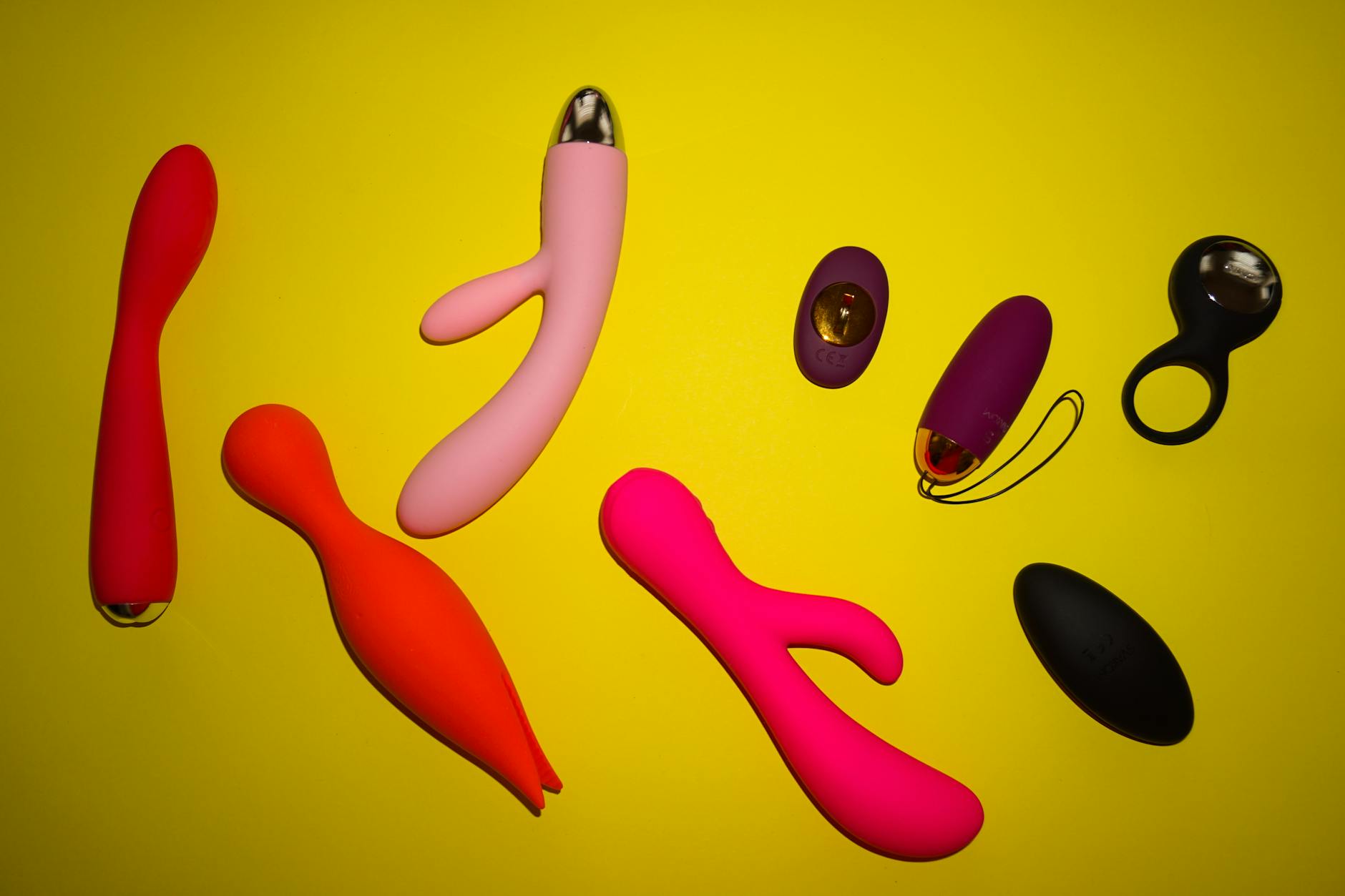
Let's be real about the thirty-five shift
Somewhere between thirty and forty, your arousal timeline changes. Not dramatically. Not overnight. But noticeably. What used to happen in five minutes now takes fifteen. Your partner touches you, and instead of immediate spark, there's a lag. A gap. A question mark where there used to be certainty.
This isn't a personal failing. It's not low libido. It's not a sign that your body is breaking down. It's physiology, and once you understand it, you can work with it instead of fighting it.
What actually happens to arousal after thirty-five
Three things shift simultaneously, and they all matter.
First, blood flow response slows. Arousal depends on blood rushing to the genitals, and after the mid-thirties, that vascular response takes longer to trigger. Your nervous system still works, your desire still exists, but the hydraulic part of the equation moves slower.
Second, hormonal shifts begin earlier than most people realize. Testosterone peaks in your early twenties and steadily declines after thirty. This happens in everyone with ovaries, not just people approaching menopause. Lower testosterone means lower baseline desire and a slower ramp-up to arousal.
Third, your clitoris is more sensitive to friction as you age. This sounds like it should make things easier, but it often makes light touch feel less effective. You need different stimulation. You need patterns that work with your physiology, not against it. This is where lemon vibrators change everything.
Why longer arousal time isn't the same as lost desire
Here's the trap: people assume slower arousal means weaker desire. They don't. These are separate systems. Your brain wants you. Your body just needs a different warm-up. The orgasm that eventually arrives after a longer buildup is often more intense, more full-bodied, and more satisfying than the quickfire versions of your twenties.
I've worked with hundreds of people in their mid-thirties and forties who spent months worried their libido was dying, only to realize that their arousal pattern had simply matured. They weren't less sexual. They were differently sexual.
The difference between accepting this reality and fighting it is significant. Fighting it creates anxiety, which creates more lag, which creates more doubt. Accepting it, by contrast, opens up space for deeper, longer pleasure sessions that many people describe as the best sex of their lives.
How lemon clitoral vibrators solve the timeline problem
A lemon sucker or traditional vibrator works on immediate friction. The Lem and other lemon vibrators use air-suction technology, which changes everything about how quickly arousal builds. Instead of requiring your body to reach a certain level of vascular engagement before pleasure kicks in, suction stimulates nerve endings directly. It bypasses the wait.
This is practical: if you have thirty minutes for sex and ten of those used to disappear in buildup, you've now reclaimed that time. You can spend it on connection, on foreplay, on the parts that made you fall in love with your partner in the first place.
But it's also psychological. When you remove the friction of "why isn't this working as fast as it used to," something shifts. You relax. Relaxation is the single best predictor of good arousal in people over thirty-five. Your nervous system can't simultaneously be tense and aroused. Lemon vibrators remove one source of that tension.
The warm-up strategy that actually works
Forgot about the old five-minute foreplay model. Here's what works for people dealing with slower arousal:
Start before you're in bed. Anticipation primes your nervous system. A text from your partner. A thought about something you want to try. Mental arousal is the first layer of the foundation.
Give yourself fifteen to twenty minutes of non-genital touch first. Neck, shoulders, inner wrists, collarbone. These areas have high nerve density and wake up your sensory system without the pressure of "am I aroused yet."
Introduce your lemon vibrator or Lem on a lower setting before anything else. Not as the main event. As the bridge. Two to three minutes on pattern one or two, on the outer labia, not directly on the clitoris. This jumpstarts the vascular response without overwhelming sensation.
Then slow down. Back to manual touch. Kissing. The vibration should have primed your nervous system enough that you're now in a responsive state, not a chasing state.
The total arc moves from anticipation to touch to gentle vibration to manual play to deeper stimulation. It's slower. It's also significantly more reliable if you're someone who's started experiencing that post-thirty-five lag.
Why intensity settings matter more now
When arousal takes longer, starting at high intensity backfires. You're not ready for it. Your tissues aren't engorged enough. Your nervous system hasn't caught up to your intention. High intensity on an unprepared body feels ineffective, which reinforces the "something's wrong with me" narrative.
The lemon clitoral vibrators Lemon Toys Official makes are specifically designed with this in mind. Start low. Build gradually. You'll find a sweet spot where the pattern feels exactly right for your current state of arousal, not where you wish you already were.
As arousal deepens over the course of your session, you can adjust up. But the permission to start slow, to layer gradually, to meet your body where it actually is instead of where you think it should be. That permission changes everything.
The partner conversation that needs to happen
If you're with someone, the arousal timeline shift is a relationship conversation, not just a personal one. Many people in their mid-thirties are frustrated because they feel like their partner has lost interest. Often what's actually happened is their partner's arousal is slower to show.
You need to name it. "My body needs more time to warm up now. This isn't about you. It's about how my physiology works." And then, crucially, you need to make that time pleasurable for both of you. A lemon vibrator in partnered sex isn't a workaround. It's an enhancement. It gives you both something to enjoy while your body builds toward full arousal.
Some of the most connected sex I've witnessed in my years working with couples has happened after someone said the hard thing out loud and then they figured out how to work with it together. That moment of "okay, we're doing this differently now" often leads to deeper intimacy than the quickfire versions ever did.
The solo pleasure angle
If you're exploring solo, this is your lab. You get to test what actually works without the pressure of someone else's timeline. A lemon vibrator isn't just a tool. It's permission to be slow, to be curious, to spend forty minutes with your own pleasure without anyone else's expectations coloring the experience.
Many people discover that once they remove the external pressure to perform a certain timeline, they actually prefer the slower build. There's more anticipation. More tension. More release. The orgasm that arrives after twenty minutes of patient exploration feels fundamentally different than one that rushed.
When to check in with a doctor
If arousal has become not slower, but completely absent. If there's pain where there wasn't before. If something feels genuinely wrong, not just different. That's not a normal thirty-five shift. That's a signal to see a gynaecologist or your GP. Thyroid issues, vitamin deficiencies, medication side effects, and other medical conditions can flatten arousal. They're also treatable.
But if you're just noticing that your arousal pattern has stretched from five minutes to fifteen? That's not a medical issue. That's growing up. And you can absolutely work with it using the right tools and the right mindset.
FAQ: What else people ask about arousal after thirty-five
Why does arousal take longer after thirty-five specifically?
It's not a magic number. The thirty-five mark is when most people start noticing the cumulative effect of hormonal decline, which begins in the late twenties. Testosterone drops steadily. Vascular responsiveness slows. It's not sudden. It's gradual. Most people don't consciously register the shift until their mid-thirties when the difference becomes noticeable compared to their twenties baseline.
Can I speed up arousal with a lemon vibrator, or does it just mask the problem?
You're speeding it up legitimately. Air-suction technology like the ones in lemon vibrators stimulates nerve endings in a way that does trigger arousal faster. You're not faking it. You're jumpstarting a process that would otherwise take longer. Once your nervous system is engaged, the rest follows naturally.
Is slower arousal a sign of lower libido?
Not necessarily. Libido is your overall desire. Arousal is the physical response. You can have high libido and slower arousal response. The two aren't the same. Many people with high libido and slower arousal actually report deeper satisfaction once they stop fighting the timeline.
Should I tell my partner about this, or just use a vibrator quietly?
Tell them. Not as "something's wrong with me," but as "here's how my body works now." This opens the door to shared exploration instead of silent frustration. Partners who know what's happening can help. Partners who don't know just feel rejected.
Does arousal speed up again after forty?
Sometimes, no. But pleasure deepens. Many people report that post-forty, they care less about speed and more about quality. The shift from "how fast can I orgasm" to "how good does this feel" is often the real gift of aging out of thirty-five.
Can stress or busy life make arousal slower too?
Absolutely. Stress, burnout, and mental load genuinely slow arousal response. If you're dealing with slower arousal, it's usually a combination of physiology plus life circumstances. Remove the life stress where you can. Use tools like lemon vibrators to bridge the physiological gap. Both matter.
Here's what I want you to know
Your body at thirty-five is not a downgrade. It's a different system, with different needs and actually different capacities for pleasure. The arousal timeline shift isn't something to fix. It's something to understand, accommodate, and often to celebrate.
A lemon clitoral vibrator fits into this new reality not as a substitute for what you had before, but as a tool designed for who you are now. When you combine the right device with the right mindset and the right conversation with your partner, the sex gets better, not worse. That's not theory. That's what I've seen happen, again and again, in people's actual lives.
Your pleasure matters. Your timeline matters. And you deserve tools that work with your body as it actually is, not as you wish it still were.
References
- American College of Obstetricians and Gynecologists. "Sexual Dysfunction." ACOG Patient Education Pamphlet.
- Kingsberg, Sheryl A., et al. "Pursuing Happiness: The Relationship Between Sexual and Overall Well-being in Midlife Women." Maturitas, 2017.
- Leiblum, Sandra R., & Sachs, David L. "Getting the Sex You Want: A Woman's Guide to Becoming Proud, Passionate, and Satisfied in the Bedroom." Crown Publishers, 2002.
- Pfaus, James G. "Pathways of Sexual Desire." The Journal of Sexual Medicine, 2009.
- Nappi, Rossella E., & Lachowsky, M. "Menopause and Sexuality: Prevalence of Symptoms and Impact on Quality of Life." Maturitas, 2009.